If you are deciding between West University Place and the Memorial Villages, you are not choosing between a clear winner and a clear loser. You are choosing between two very different ways of living in Houston, each with its own rhythm, housing pattern, and daily convenience. The right fit depends on how you want your home to feel, how you move through the city, and what kind of setting supports your life best. Let’s dive in.
Two Distinct Houston Lifestyles
West University Place is a compact inner-loop city with about 15,149 residents across roughly 2 square miles, according to the U.S. Census QuickFacts profile. The city describes itself as primarily residential and notes that it is minutes from downtown, Rice University, the Texas Medical Center, and the Galleria/Uptown area. That location shapes much of the appeal.
The Memorial Villages, by contrast, are a group of six incorporated cities: Bunker Hill, Hedwig, Hilshire, Hunters Creek, Piney Point, and Spring Valley, as outlined on the Hunters Creek overview of the Villages. Rather than one compact municipality, this area offers a broader range of residential settings. Official descriptions emphasize wooded streets, low-density living, and a residential character that has been preserved through local zoning.
At a high level, West U tends to feel more connected to central Houston destinations, while the Memorial Villages often feel more private and more spread out. That does not make one better than the other. It simply means your priorities matter.
Lot Size and Home Style
One of the biggest tradeoffs is the scale of the homesites. In West U, the zoning pattern is generally compact by Houston standards. The city’s zoning tables show older single-family building sites can be as small as 5,000 square feet, while newer single-family sites are shown at 8,250 square feet, depending on district and site vintage, as reflected in the city’s zoning ordinance materials.
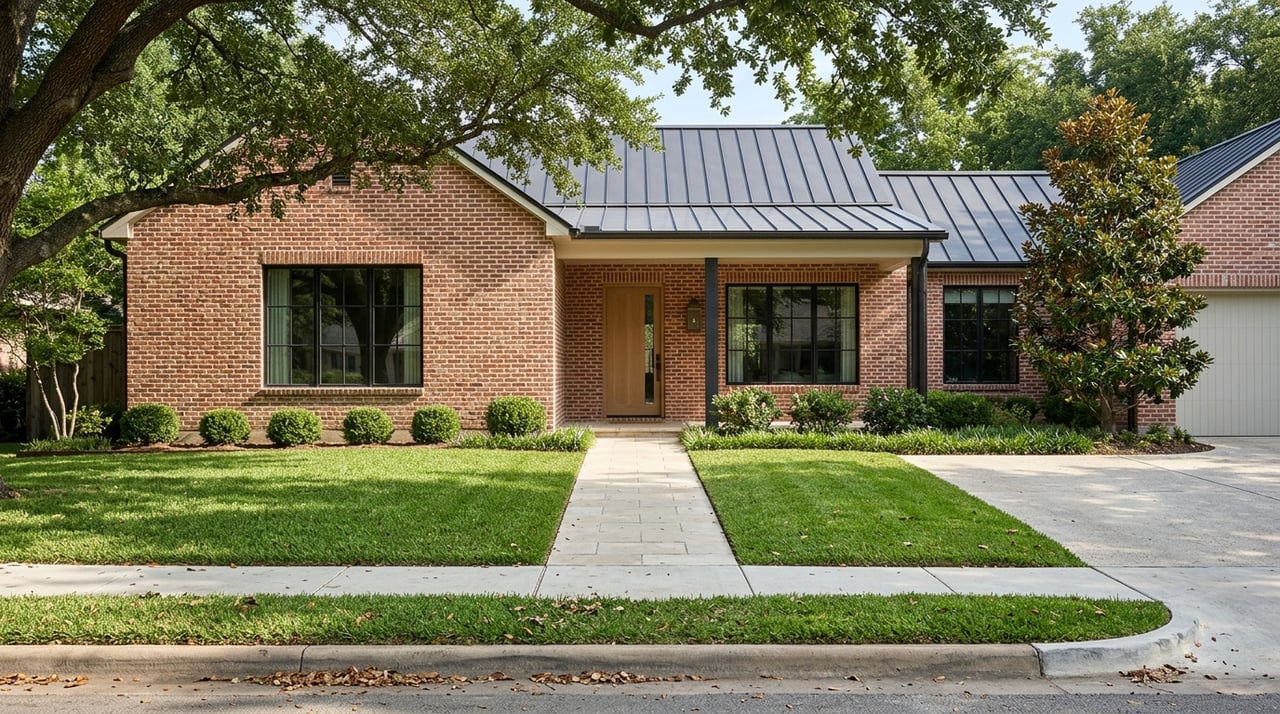
That compact framework has influenced the look of the housing stock. West U’s comprehensive plan explains that many original cottages and bungalows have been replaced since the 1980s by larger two-story custom homes. As you drive through the area, that can create a varied streetscape, with older homes in some pockets and newer infill or rebuilt homes in others.
The Memorial Villages offer a wider lot-size spectrum. A current Piney Point Village ordinance excerpt requires lots of at least 40,000 square feet, while a Spring Valley ordinance excerpt within the same source shows a 10,000 square-foot minimum lot area with a 70-foot minimum width. In practical terms, some streets in the Villages feel estate-like, while others feel closer to a conventional suburban scale.
If your wish list includes a larger yard, more separation from neighboring homes, or a more expansive homesite, the Memorial Villages will often give you more options. If you prefer a more compact setting with a strong pattern of custom homes close to central destinations, West U may align better.
Commute Logic Matters
For many buyers, the choice becomes clearer once you think about your weekly drive patterns. West U is often the stronger fit if your life revolves around inner-loop destinations. The city notes its proximity to downtown, Rice University, the Texas Medical Center, and Uptown/Galleria, which supports its appeal for buyers who want easier access to central Houston hubs.
The Memorial Villages sit farther west and tend to favor a different commute pattern. Bunker Hill’s official profile and financial reporting place it about 10 miles west of downtown and describe it as convenient to the Galleria, downtown, the Texas Medical Center, and the Energy Corridor, with a particularly natural connection to west-side travel routes. If your work or routine leans toward I-10, Memorial, or west Houston job centers, that can be meaningful.
A helpful way to think about this is simple:
- West U often fits inner-loop, Medical Center, Rice, and central-city routines.
- Memorial Villages often fit I-10, Memorial corridor, and Energy Corridor routines.
This is not just about drive time on paper. It is about which part of Houston your daily life naturally points toward.
Daily Feel and Neighborhood Pattern
West U and the Memorial Villages also differ in how they feel day to day. West U has a tighter neighborhood grid and a strong civic presence. The city lists nine parks, including Colonial Park, Friends Park, Huffington Park, Judson Park, and Wier Park, and it highlights sidewalk improvements, a pedestrian pathway along Edloe Street, and planning focused on walking and bicycling.
That makes West U a practical choice if you value a neighborhood where parks, sidewalks, and nearby retail are woven into daily life. The city also says it has retained a small-town feel while staying close to major Houston amenities, as described on its community overview page. The result is a setting that often feels active, connected, and visually compact.
The Memorial Villages generally lean quieter and lower density. Bunker Hill’s city profile describes a quiet, wooded community, and the city’s reporting notes that it is 100% residential. The broader Villages also host recurring community events, including a farmers market and an Independence Day parade, giving the area its own civic rhythm without changing the overall low-density character.
If you are comparing the two in lifestyle terms, the broad pattern looks like this:
- West U: more compact, more pedestrian-oriented, more tied to parks and nearby services.
- Memorial Villages: more private, more wooded, more residential in feel, with greater variation in lot scale.
Density and Sense of Space
Even without looking at individual homes, the two settings feel different on a basic spatial level. Using population as a rough proxy, West U is much more compact. With about 15,149 residents in roughly 2 square miles, it comes out to about 7,575 people per square mile based on Census data.
The research context compares that with Bunker Hill Village, which had 3,822 residents across 1.44 square miles in its 2024 reporting, or about 2,654 people per square mile. That is not a lot-size measure, but it helps explain why the Memorial Villages often feel more open and less compressed. If your definition of luxury includes more breathing room, this difference is worth considering.
Schools and Municipal Context
School district boundaries are another practical point to confirm early in your search. West U is zoned to Houston ISD. In the Memorial Villages context provided here, Bunker Hill and the broader Villages area are described as being served by Spring Branch ISD.
It is also worth noting that municipal identity plays a role in the experience. West U is one small city with its own coordinated parks, infrastructure, and planning framework. The Memorial Villages are six separate cities, so the setting can vary meaningfully depending on whether you are looking in Piney Point, Spring Valley, Hunters Creek, or another village.
Which Buyer Tends to Prefer West U?
West University Place often makes the most sense if you are looking for:
- Faster access to central Houston destinations
- A more compact neighborhood pattern
- Parks, sidewalks, and pedestrian improvements close at hand
- A mix of original homes and custom rebuilds
- A smaller-city feel within the inner loop
If you enjoy an active daily rhythm and want your neighborhood to feel closely connected to the rest of Houston, West U is often compelling.
Which Buyer Tends to Prefer Memorial Villages?
The Memorial Villages often appeal more if you are looking for:
- Larger homesites, depending on the village
- More privacy and lower-density surroundings
- A wooded residential setting
- Better alignment with west-side commute patterns
- A wider range of lot scales, from suburban to estate-style
If you want more land, more separation, and a quieter residential feel, the Villages may be the stronger fit.
The Real Tradeoff
In the end, this decision is less about prestige and more about fit. West U offers a compact, central, park-oriented lifestyle with strong inner-loop convenience. The Memorial Villages offer more space, more privacy, and a broader range of residential settings shaped by village-specific zoning and geography.
The best way to compare them is not by asking which is better in general. Ask which setting better supports your commute, your space needs, and the kind of home environment you want to return to every day. If you want thoughtful guidance as you compare West University Place and the Memorial Villages, Patricia Reed brings a research-driven approach and a design-trained eye to help you weigh the details with clarity.
FAQs
Is West University Place or Memorial Villages more walkable?
- West University Place is generally the more walkable option because of its compact footprint, parks, sidewalks, and pedestrian-focused improvements.
Do homes in Memorial Villages usually have larger lots than homes in West University Place?
- Usually yes, although it varies by village. Piney Point has estate-scale lot requirements, while Spring Valley can be closer to a more typical suburban scale.
Is West University Place better for commuting to the Texas Medical Center?
- West University Place is usually the stronger fit for Medical Center and other central Houston commute patterns because the city describes itself as minutes from those destinations.
Are the Memorial Villages one city or several cities?
- The Memorial Villages are a collection of six incorporated cities: Bunker Hill, Hedwig, Hilshire, Hunters Creek, Piney Point, and Spring Valley.
What school district serves West University Place and Memorial Villages?
- West University Place is zoned to Houston ISD, while the Memorial Villages context provided here indicates service through Spring Branch ISD.
Does West University Place feel denser than Memorial Villages?
- Yes. Based on the population figures in the research, West U is significantly more compact, which contributes to a tighter neighborhood feel than areas like Bunker Hill Village.